


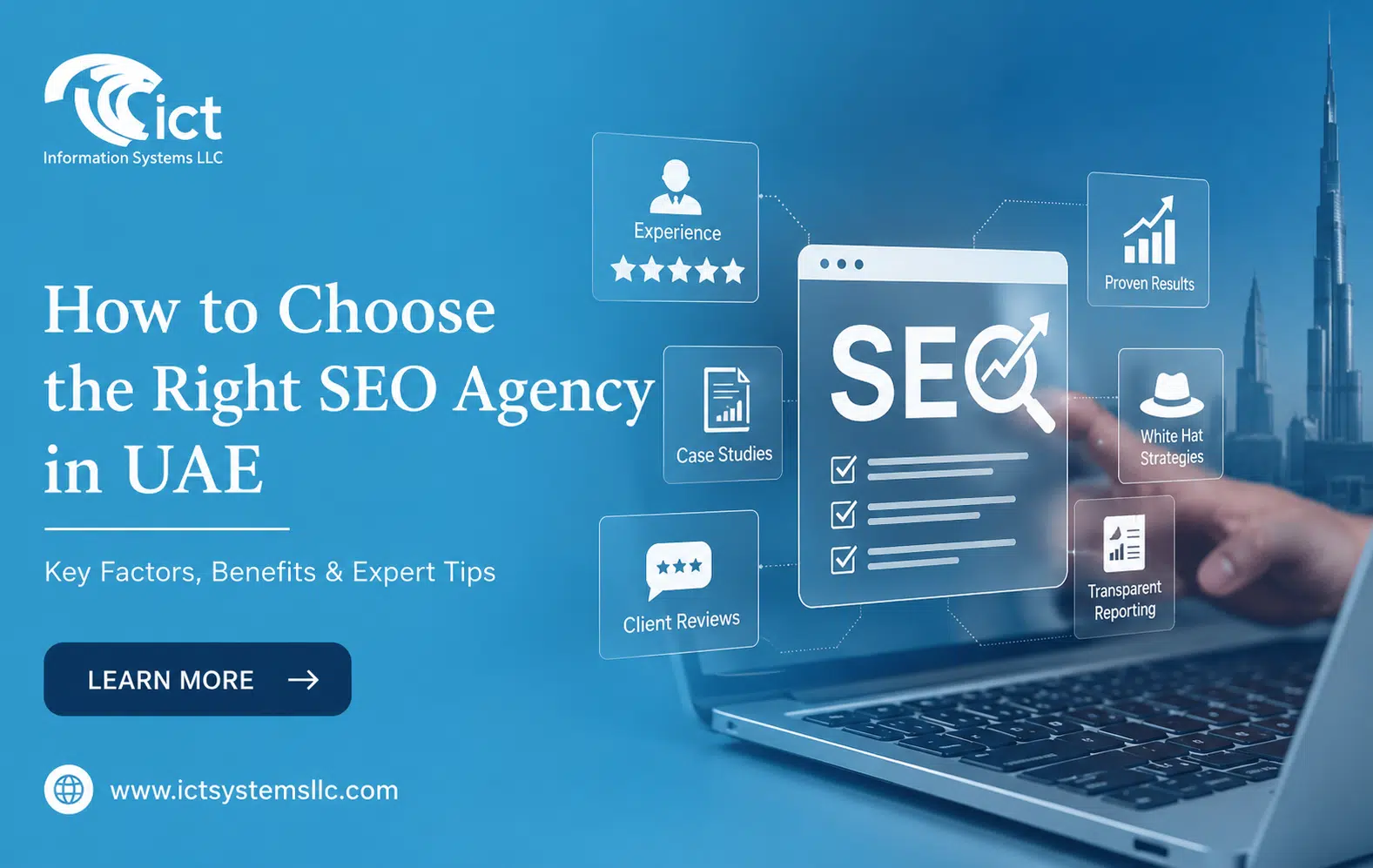
Finding the right SEO partner in a market as competitive as the UAE can feel overwhelming. There are dozens of agencies out there, all promising first-page rankings and overnight success. But here’s the truth—how to choose the right SEO agency in UAE comes down to knowing what to look for, what questions to ask, and which red flags to avoid. This guide walks you through everything, clearly and honestly.
Why the UAE Market Demands a Smarter Approach to SEO
The UAE is not your average market. You’re dealing with a multilingual audience (primarily Arabic and English), a tech-savvy population, and a business environment that shifts quickly—especially in cities like Dubai and Abu Dhabi. On top of that, Google’s algorithms are getting sharper every year, which means the old-school tactics of keyword stuffing and backlink farming don’t work anymore.
What works now? Intent-driven content, technical excellence, local optimization, and a long-term strategy built on trust. That’s why choosing the right SEO agency isn’t just a vendor decision — it’s a strategic business decision.
What Does a Reputable SEO Agency in UAE Actually Do?
Before you start shortlisting agencies, it helps to understand what a good agency should offer. A reputable SEO agency in UAE typically covers:
- Technical SEO — site speed, mobile optimization, crawlability, structured data
- On-page optimization — keyword strategy, content optimization, internal linking
- Off-page SEO — link building, brand authority, digital PR
- Local SEO — Google Business Profile, UAE-specific directories, geo-targeted content
- Analytics and reporting — monthly performance reports with real, measurable data
If an agency can’t clearly explain what they do in each of these areas, that’s your first warning sign.
How to Evaluate an SEO Agency in UAE: Step-by-Step
Step 1 — Start With Their Own Online Presence
This sounds almost too obvious, but it matters. Does the SEO agency rank for their own target keywords? Can you find them when you search “SEO agency in UAE” or related terms? If they can’t optimize their own website, why would you trust them to optimize yours?
Visit their site. Is it fast? Is it mobile-friendly? Does it have clear, useful content? These are signals of how they operate.
Step 2 — Ask for a Portfolio and Case Studies
Any serious agency will have a track record. Ask them to show you:
- Industries they’ve worked in
- Specific results they’ve achieved (traffic growth, ranking improvements, lead generation)
- How long it took to get those results
Don’t accept vague answers like “we increased traffic by X%.” Ask how — what strategies did they use, and what did the journey look like? Transparency here is non-negotiable.
Step 3 — Understand Their Keyword Research Process
Keyword research is the backbone of any SEO strategy. A good agency will take time to understand your business, your audience, and your competition before recommending a keyword plan. They should be looking at:
- Search volume and difficulty
- User intent (informational, transactional, navigational)
- Long-tail opportunities specific to your niche
- Arabic vs. English keyword dynamics for UAE audiences
If they hand you a generic keyword list on day one without a proper discovery process, be cautious.
Step 4 — Ask How They Handle Content
Google’s E-E-A-T framework (Experience, Expertise, Authoritativeness, Trustworthiness) is central to how content gets ranked today. A quality SEO agency should have a content strategy that reflects these principles — not just writing blog posts for the sake of volume, but creating genuinely useful, accurate, and expert-level material.
Ask them: Who writes the content? Do they have subject matter experts on the team? How do they ensure content quality?
Step 5 — Get Clear on Reporting
You should never be left wondering what your money is doing. A trustworthy agency will provide regular reports that show:
- Keyword rankings and changes
- Organic traffic growth
- Conversion metrics tied to SEO efforts
- Technical health scores
Monthly reports at a minimum — and they should be willing to walk you through them, not just drop a PDF in your inbox.
Red Flags to Watch Out For
Not every agency operates with integrity. Here are some warning signs that should make you pause:
They guarantee #1 rankings. No one can guarantee a specific position in Google. Rankings depend on hundreds of variables, including your competition, your website’s history, and algorithm changes. Any agency making this promise is either uninformed or dishonest.
They won’t explain their methods. If they’re vague about their link-building tactics, content strategy, or technical approach, there’s likely a reason. Black-hat SEO techniques might show short-term results, but they can result in Google penalties that are extremely difficult to recover from.
They lock you into long contracts with no out clause. A confident agency stands behind their work. Be wary of contracts that tie you in for a year with no performance benchmarks or exit options.
Their pricing seems too good to be true. Quality SEO takes time, expertise, and real effort. Extremely low-cost packages often mean outsourced, low-quality work that can hurt your site.
Questions You Should Ask Before Signing Anything
Here’s a practical checklist of questions to bring to your first conversation with any potential SEO partner:
- What does your onboarding process look like?
- How do you conduct keyword research for a business like mine?
- What tools do you use (Ahrefs, SEMrush, Google Search Console, etc.)?
- How do you approach link building, and can you show examples?
- What does a typical monthly report look like?
- Have you worked with businesses in my industry in the UAE?
- What’s your process if rankings drop?
Their answers — and how they answer — will tell you a lot.
The Importance of Local SEO Expertise in the UAE
Here’s something many businesses overlook: generic SEO doesn’t cut it in the UAE. You need an agency that understands the local landscape. That means they know how to:
- Optimize for UAE-specific searches (think “near me” searches in Dubai, Sharjah, Abu Dhabi)
- Handle bilingual content strategies for Arabic and English
- Leverage local business directories like Etisalat and Du listings
- Understand local consumer behavior and buying patterns
An agency with genuine UAE market experience will approach your strategy very differently from one that simply applies a global template.
Should You Hire a Local Agency or an International One?
There’s no single right answer here, but there are practical considerations. A local UAE-based agency typically offers the following:
- Better understanding of the local market, culture, and search behavior
- Easier communication (same time zone, in-person meetings when needed)
- Established relationships with local publishers and link partners
An international agency may bring broader experience across industries, but they’ll need time to understand the UAE market nuances. If you go international, make sure they have demonstrable regional experience—not just a claim on their website.
What About Integrated Digital Services?
Many growing businesses in the UAE realize that SEO doesn’t operate in isolation. Your website infrastructure matters. Your digital tools matter. For instance, businesses using integrated platforms benefit from cleaner data structures, faster sites, and better analytics — all of which feed directly into SEO performance. If you’re exploring broader digital transformation for your business, it’s worth looking into solutions like ERP Solution In UAE that tie your operations together, which can indirectly support your online visibility by improving site performance and data accuracy.
Choosing an Agency That Aligns With Your Business Goals
At the end of the day, the right SEO agency isn’t necessarily the biggest one or the one with the fanciest website. It’s the one that takes the time to understand your specific business goals—whether that’s generating leads, driving e-commerce sales, building brand authority, or all of the above.
Look for an agency that thinks like a business partner, not just a vendor. They should ask you about your revenue goals, your customer journey, and your competitive landscape before they ever talk about rankings.
If you’re looking for a starting point, exploring providers of the Best SEO Services In UAE with a proven track record in the region is a smart move. Vetting them using the criteria in this guide will help you separate the genuine experts from the rest.
How Long Does SEO Take to Show Results in the UAE?
This is one of the most common questions, and the honest answer is it depends. In a competitive niche in Dubai, you might be looking at 4 to 6 months before you see meaningful movement. In a less saturated market or a more niche industry, you could see results sooner.
What you should look for in the first 1 to 3 months is process—technical fixes being implemented, content going live, baseline reports being established. If an agency is showing you results in week two, that’s actually a cause for suspicion, not celebration.
Making the Final Decision
After your research, meetings, and proposal reviews, here’s a simple framework to make the final call:
Shortlist 3 agencies. Don’t make a decision based on one conversation. Talk to at least three and compare their proposals side by side.
Check references. Ask for two or three client references and actually speak to them. Ask specifically about communication, transparency, and whether results matched expectations.
Start with a trial. If possible, negotiate a 3-month pilot before committing to a longer engagement. This gives both sides time to build trust and assess fit.
Trust your gut. Seriously. If a team communicates clearly, shows genuine curiosity about your business, and doesn’t overpromise—that’s a good sign.
Final Thoughts
The UAE’s digital landscape is growing fast, and the businesses that invest in strong SEO foundations now are the ones that will lead their industries in the next few years. Choosing the right SEO agency is one of the highest-leverage decisions you can make for your online presence.
Take your time, do your due diligence, ask the hard questions, and don’t let flashy promises cloud your judgment. A great SEO agency will never mind scrutiny—because they have nothing to hide.
Frequently Asked Questions
Q1: How much does an SEO agency in UAE typically charge?
Pricing varies significantly based on scope and agency size. Small to mid-sized businesses can expect monthly retainers ranging from AED 3,000 to AED 20,000+. Enterprise-level campaigns may go higher. Always get a detailed breakdown of what’s included before agreeing to any package.
Q2: Is local SEO different from regular SEO in the UAE?
Yes. Local SEO focuses specifically on making your business visible for location-based searches — for example, “digital marketing agency in Dubai” or “SEO company near me.” It involves Google Business Profile optimization, local citations, and geo-targeted content, which is especially important in the UAE’s city-centric market.
Q3: How do I know if an SEO agency is using ethical practices?
Ask them directly about their link-building methods and content strategy. Ethical agencies will be transparent about using white-hat techniques — earning backlinks through genuine outreach, creating original content, and following Google’s guidelines. Be cautious of any agency that talks about “guaranteed results” or mentions buying links.
Q4: Can I do SEO myself instead of hiring an agency?
You can handle basic on-page SEO yourself with some learning, but technical SEO, link building, and ongoing strategy at a competitive level typically require dedicated expertise and tools. For most businesses in the UAE, the ROI of professional SEO services outweighs the cost of trying to manage it in-house.
Q5: How long should I commit to an SEO agency contract?
A 3 to 6-month initial commitment is reasonable for seeing early results and assessing the working relationship. Avoid being locked into 12-month contracts without any performance benchmarks or exit clauses. A confident agency will welcome shorter trial periods.
Q6: What metrics should I track to measure SEO success?
The most important metrics include organic traffic growth, keyword ranking improvements, domain authority, bounce rate, pages per session, and — most critically — conversions or leads generated through organic search. Rankings alone are vanity metrics if they’re not translating into business outcomes.